Fresh-Milled Emmer Sourdough: Build Strength Without Overworking
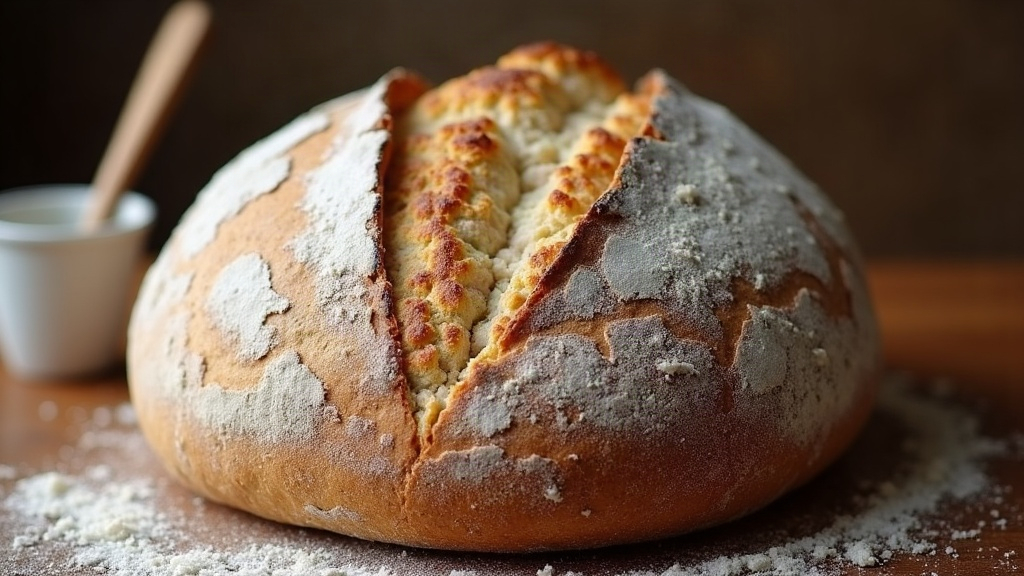
Fresh-milled emmer sourdough rewards a gentle hand. Right after milling, the bran and germ are sharp and plentiful, and aggressive kneading just shreds the gluten strands instead of building them up. The real secret to strength here is patience. Hydration, time, and a handful of well-timed folds do the work that kneading would normally handle in a standard white-flour loaf.
Why Emmer Behaves Differently Than Modern Wheat
Emmer (Triticum dicoccum) is one of the oldest cultivated wheats around, and its gluten network is weaker and more extensible than what you’d find in modern bread wheat. Fresh-milled emmer makes this even more pronounced, for a few reasons:
- Bran particles are sharp and uncoated. Fresh off the mill, those bran edges haven’t softened yet, so they physically slice through developing gluten strands if you knead too hard.
- The germ’s natural oils interfere with gluten bonding. Fresh germ is oilier and more active than flour that’s been sitting on a shelf for weeks. That extra oil content can leave your dough feeling slack and loose.
- Enzyme activity runs higher. Fresh-milled flour carries more active amylase and protease enzymes, which break down starches and proteins faster. Good news for flavor, but it also means the dough loses strength quicker if you overwork it.
Here’s the mental shift that matters: fresh-milled emmer isn’t difficult or broken. It just plays by different rules than the commercial bread flour you might be used to.
Step 1: A Long, Generous Autolyse
Before folding anything, mix your fresh-milled emmer with water and let it sit, untouched by salt or starter, for 45 minutes to 2 hours.
- This fully hydrates the bran, softening the sharp edges that would otherwise tear your gluten apart.
- It also gives enzymes a head start on breaking down starches into sugars, feeding your sourdough culture and building deeper flavor along the way.
- For 100% emmer doughs, lean toward the longer end (closer to 2 hours). The bran simply takes more time to soften than it would in all-purpose flour.
Step 2: Hydration Is Your Strength-Building Tool
Fresh-milled emmer usually wants more water than you’d expect, often landing somewhere between 75% and 85% depending on how finely it was milled. Higher hydration does two things for you:
- It lets gluten strands shift and align on their own, without needing mechanical force to push them into place.
- It keeps the dough extensible enough that folding, not kneading, can actually build real structure.
If your dough feels stiff and tears when you stretch it, add water in small splashes (10-20g at a time) during the autolyse or in those early fold stages.
Step 3: Replace Kneading With Coil Folds
This is the core move for building strength without wrecking the dough:
- Skip traditional kneading entirely. Instead, run 4-6 sets of coil folds through bulk fermentation, spaced about 30-45 minutes apart.
- To coil fold: wet your hands, lift the center of the dough, let the ends drop and fold underneath on their own, rotate 90 degrees, repeat.
- Stop the moment the dough pushes back. If it feels like it’s resisting or starting to tear, that’s your signal. Stop right there instead of chasing extra “development.”
Each fold session shouldn’t take more than a minute. You’re after alignment, not force.
Step 4: Watch Fermentation Closely
Fresh-milled emmer ferments noticeably faster than commercial flour, thanks to its enzyme activity and the nutrients still locked in the bran and germ.
- Expect bulk fermentation to wrap up 20-30% faster than it would with store-bought whole wheat.
- Rely on the poke test: the dough should spring back slowly, leaving a faint indentation behind. If it snaps back instantly or just collapses, you’ve got your answer either way.
- Over-fermented emmer dough falls apart fast. It turns slack and sticky, since the gluten, already fragile to begin with, breaks down even further.
Step 5: Gentle Shaping, Minimal Handling
When it’s time to shape:
- Keep your touch light and use minimal flour. Too much dusting flour dries out that sticky, bran-heavy surface and keeps your seams from sealing properly.
- Pre-shape into a loose round, let it rest 15-20 minutes, then final-shape with just enough tension to hold its form. Don’t over-tighten. Push emmer dough too far and it tears instead of stretching.
Common Mistakes to Avoid
- Kneading it like white flour dough. This is the number one cause of torn, gummy emmer loaves. Every single time.
- Under-hydrating. Dry dough is stiff dough, and stiff dough tears the moment you try to fold it.
- Skipping the autolyse. Skip this step and the bran stays sharp, cutting into the gluten structure from your very first touch.
- Over-proofing. Fresh-milled emmer has a tighter proofing window than refined flour offers. Watch the dough itself, not just the clock on the wall.
Final Thoughts
Building strength in fresh-milled emmer sourdough has nothing to do with muscle and everything to do with timing. A long autolyse, generous hydration, and a series of gentle coil folds take the place of kneading altogether, protecting that fragile gluten network while still giving you an open, well-structured crumb. Work with the grain’s character instead of fighting it, and you’ll end up with a loaf that has real strength, real flavor, and a genuine rise.