Sourdough English Muffins: Griddle vs Cast-Iron Skillet
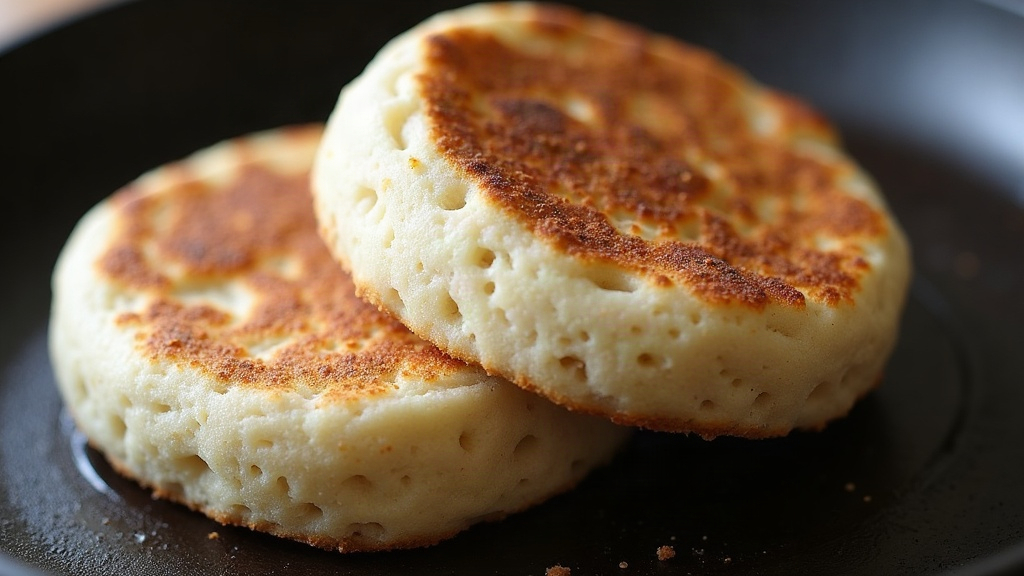
Griddle or cast-iron skillet for sourdough English muffins? Here’s the quick version: a griddle wins if you’re cooking a big batch and want even heat across the board. A cast-iron skillet wins if you care more about a deep, toasty crust and don’t mind babysitting two or three muffins at a time. Both get you that classic nooks-and-crannies crumb. The real difference shows up in consistency, convenience, and how much hands-on control you want.
Why the Cooking Surface Matters So Much
Sourdough English muffins cook entirely on the stovetop, usually low to medium heat, 8 to 12 minutes a side. There’s no oven cushioning things here. No ambient heat doing half the work. The pan is doing everything, which means your choice of surface directly shapes:
- Browning speed and evenness
- How much the dough spreads before it sets
- Whether you end up with a dry, powdery crust (the traditional look) or something shinier and griddle-seared
- How many muffins you can realistically cook in one go
Griddle: Best for Volume and Consistency
A flat electric or stovetop griddle gives you a wide, evenly heated surface. If you’re making 6 to 8 muffins for a weekend brunch crowd, this is your tool.
Pros:
- Heat spreads evenly, so every muffin browns at close to the same rate. No constant shuffling pieces around to even things out.
- You can cook a full batch in one pass instead of doing two or three rounds.
- Electric griddles hold a steady temperature (around 300-325°F / 150-165°C is the sweet spot), so scorching is less of a risk.
Cons:
- Heat retention isn’t as strong as cast iron. Open a muffin to check it, or let a draft hit the kitchen, and the surface temp drops more easily than you’d like.
- The crust won’t get quite as deep as what cast iron produces, mostly because flat griddles lose heat faster once cool dough hits the surface.
Cast-Iron Skillet: Best for Crust and Char
A well-seasoned cast-iron skillet holds heat like a furnace holds coal. Preheat it over low-medium for 5 to 7 minutes and it stays hot even as cooler rounds of dough land on it. The payoff: a deeply browned, almost charred-at-the-edges exterior.
Pros:
- Better heat retention means a thicker, crisper crust with more visible color contrast.
- A properly seasoned pan is naturally non-stick, so you can go lighter on the cornmeal or flour dusting.
- It doubles as a finishing tool. Tent a lid over it to trap steam and cook the interior through without flipping every two minutes.
Cons:
- Smaller surface area. You’re typically fitting 2-3 standard 3.5-inch muffins at once, so a full batch stretches out over more rounds.
- Heat near the edges can run cooler than the center, so you’ll need to rotate muffins partway through.
- It demands more attention. A thermostat-controlled griddle forgives a wandering mind; cast iron doesn’t.
Which One Produces Better Crumb?
Honestly, crumb structure comes down to dough hydration, proofing time, and fermentation far more than which pan you grab. A well-fermented sourdough (ideally with an overnight cold proof) will give you those signature nooks and crannies on a griddle or in a skillet, no question. That said, cast iron’s stronger bottom heat sets the crust a touch faster, and some bakers swear this traps a bit more steam inside, giving a slightly airier interior as a result.
Practical Recommendation
- Feeding a crowd? Griddle. Speed and consistency win here, full stop.
- Small batch, chasing that restaurant-style crust? Cast iron.
- Don’t own a griddle? Get a heavy cast-iron skillet instead. It’s the better one-pan investment anyway, since it also handles eggs, bacon, and searing for everything else in your kitchen.
- Want both speed and crust quality? Preheat two cast-iron skillets at once. You’ll mimic griddle-level throughput without giving up the crust.
Final Tips for Either Method
- Keep the heat low-medium. English muffins need slow, steady cooking so the crumb sets before the outside scorches.
- Use a ring mold (or a clean tuna can works fine) to keep the rounds tall and even, no matter which surface you’re using.
- Dust with cornmeal. It gives you that classic griddle texture and keeps things from sticking.
- Let the muffins cool before splitting them. Use a fork, not a knife. Cutting with a blade crushes the airy crumb you just spent hours developing.
Conclusion
Both tools can turn out excellent sourdough English muffins. It really comes down to what you’re optimizing for: a griddle if you want batch efficiency and even heat across the board, cast iron if you’re after a deeper crust and don’t mind the extra attention it demands. Either way, your fermentation schedule and dough hydration will shape the final crumb more than the pan ever will.