Sourdough Focaccia with Roasted Grapes and Rosemary
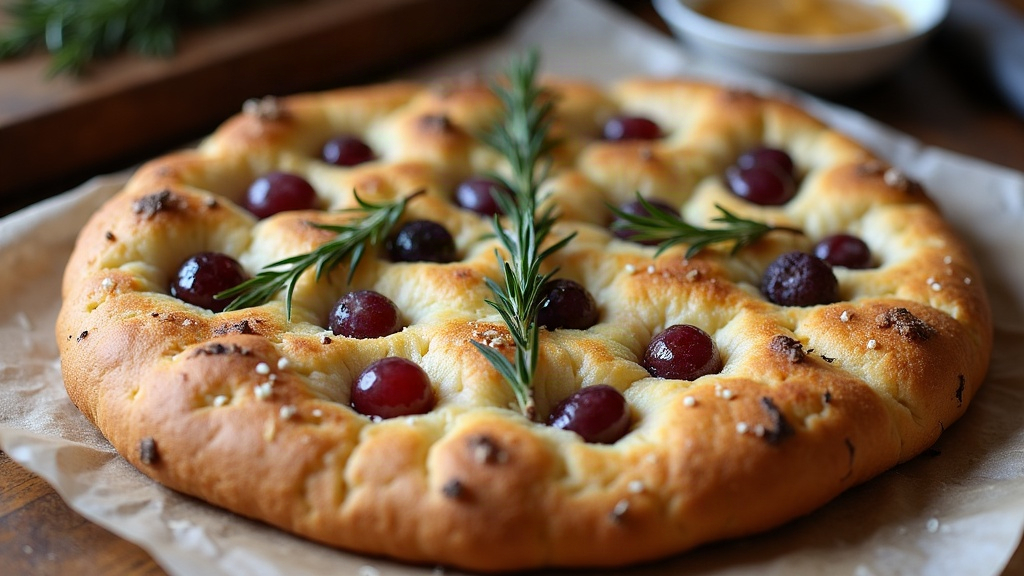
Naturally leavened sourdough focaccia with roasted grapes and rosemary gives you everything you want from this bread: a pillowy, open crumb, jammy caramelized fruit, and the fragrance of fresh herbs, all without a single packet of commercial yeast. This guide walks through the whole process, from feeding your starter to dimpling the dough, so you end up with a focaccia that looks like it came from a bakery but was actually made in your own kitchen.
Why Sourdough Focaccia Works So Well
If you’re new to sourdough, focaccia is honestly one of the easiest places to start. Here’s why:
- High hydration hides imperfections. A wet, slack dough naturally traps big air pockets as it ferments, so even if your starter wasn’t fed perfectly, you’ll still get decent results.
- Olive oil adds flavor and oven spring insurance. Dough enriched with oil stays tender inside and browns beautifully on top, almost foolproof once it hits the oven.
- Long fermentation builds flavor without extra steps. The slow sourdough rise develops a quiet tang in the background, which happens to pair really well with sweet roasted grapes.
Ingredients You’ll Need
- 100g active, bubbly sourdough starter (fed 4-6 hours before mixing)
- 500g bread flour (or swap 10% for whole wheat if you want more depth)
- 375g water (75% hydration)
- 10g fine sea salt
- 60g extra virgin olive oil, divided
- 2 cups red or black seedless grapes, halved
- 3-4 tablespoons fresh rosemary, roughly chopped
- Flaky sea salt for finishing
Step-by-Step Method
1. Build Your Levain Timing
Feed your starter so it peaks (doubled, domed, visibly bubbly) right around the time you plan to mix. That’s usually 4-8 hours after feeding, depending on how warm your kitchen is. Miss the peak and go past it, and you’ll end up with a denser, flatter focaccia, no shortcuts here.
2. Mix and Autolyse
Start by combining just the flour and water, then let it sit for 30-45 minutes before adding the starter and salt. This autolyse step gives the gluten a head start. It matters more in a wet dough like this one, where the gluten network needs all the help it can get to hold together.
3. Bulk Fermentation with Stretch and Folds
Once the starter and salt are mixed in, do 4-5 rounds of stretch-and-folds, about 30 minutes apart. No kneading required, this builds strength gently. After that, let the dough bulk ferment for 6-10 hours at room temperature (68-72°F) until it looks puffy and has grown roughly 50-75% in size.
4. Cold Retard for Flavor (Optional but Recommended)
Pop the dough in the fridge overnight, 8-12 hours works well. This cold, slow fermentation deepens the sour flavor notes and, as a bonus, makes the dough much easier to handle the next morning.
5. Pan and Proof
Oil a 9x13-inch pan generously, don’t be shy with it. Gently stretch the dough to fill the pan, cover it, and let it proof at room temperature for 2-3 hours, until it’s puffy and jiggles slightly when you touch it.
6. Dimple, Top, and Bake
Drizzle olive oil over the top and dimple the dough firmly with oiled fingers, pressing all the way down to the pan. This is what gives focaccia its signature craggy, dimpled surface. Scatter the halved grapes cut-side up, press rosemary leaves into the dough, and finish with a sprinkle of flaky salt.
Bake at 450°F (230°C) for 22-28 minutes. You’re looking for deep golden color on top and grapes that have blistered and caramelized at the edges.
Troubleshooting Common Issues
- Dense, tight crumb: Either your starter wasn’t active enough, or bulk fermentation got cut short. Check for visible bubbles at the surface of the dough before you move it to the pan.
- Grapes sinking or burning: Always halve the grapes and set them cut-side up. This keeps moisture from pooling underneath and stops the sugars from scorching in the oven.
- Flat focaccia: Over-proofing after panning is usually the culprit, the dough rises too far and then collapses. Bake the moment it feels airy and jiggly, not when it’s already spilling over the edge of the pan.
Serving Suggestions
This focaccia earns its place on a cheese board next to something soft like burrata or goat cheese. It’s also great served warm alongside roasted chicken. And don’t overlook the leftovers: sliced thin, it makes a surprisingly good sandwich bread, especially with prosciutto, where the sweetness of the grapes plays off the saltiness in a way you wouldn’t expect.
Conclusion
Sourdough focaccia with roasted grapes and rosemary takes patience, there’s no getting around the timing of the starter and the long fermentation. But get that part right, and you’re rewarded with a bread that’s as striking to look at as it is to eat: crisp and golden on the outside, full of sweet-savory contrast in every single bite.